Across America, Beat the Streets is helping young people find a place on the mat and a future beyond it.
By J.R. Casarez
Maggie Zuber had a place to wrestle. What she wanted was a team at her school.
The Chicago teenager trained with Beat the Streets, but Mother McAuley, her all-girls high school, did not offer wrestling. She pushed to change that. When she needed a coach, she turned to Samantha Barrientos, the woman already helping her grow through the sport.
Barrientos said yes. Together, athlete and mentor helped bring girls wrestling to Mother McAuley. A young person who had benefited from an opportunity was now creating one for others.
For anyone trying to understand Beat the Streets, that is a good place to begin.
The organization has champions to celebrate and results to prove its athletes belong. Its deepest achievement is helping young people recognize that they can do more than occupy the spaces available to them. They can build new ones.
Across 13 accredited chapters, Baltimore, the Bay Area, Chicago, Cleveland, Detroit, Lancaster, Los Angeles, New England, Newark, New York City, Philadelphia, Tampa, and Washington, D.C., Beat the Streets connects neighborhood coaching and mentoring to a national community. USA Wrestling identifies health and wellness, social and emotional learning, and academic access as pillars of its work.
Those commitments take shape in ordinary, repeated acts: a practice, a lesson, another chance to try. They also take shape in journeys that expand what a teenager believes is possible.
In June 2026, approximately 400 athletes from 11 chapters gathered at Case Western Reserve University in Cleveland for the BTS National Enrichment Camp & Duals. The week brought together wrestling, career exploration, leadership development, and community service. Approximately 160 female athletes participated, and 10 girls teams competed.
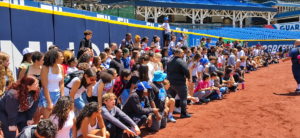
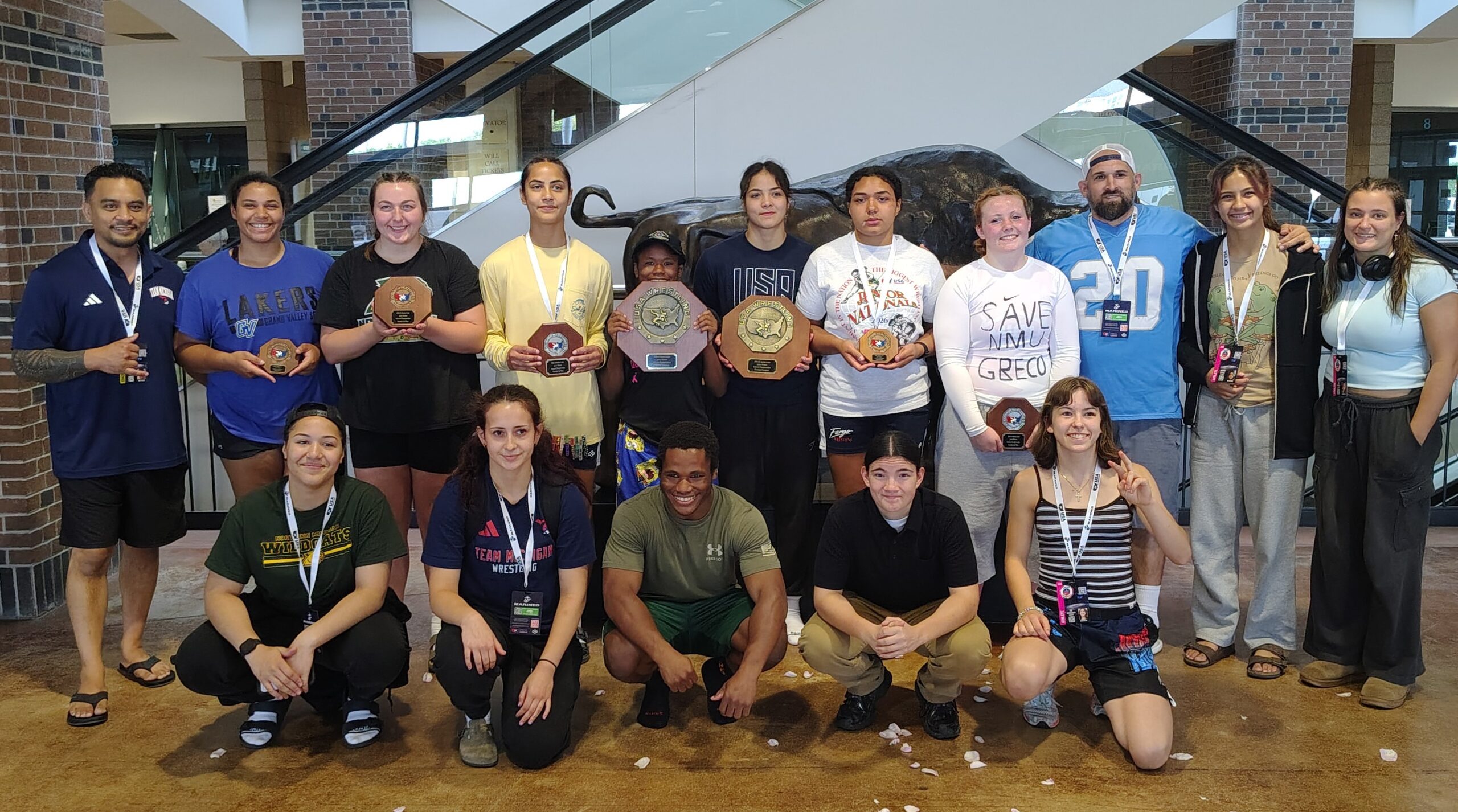
Wrestlers and coaches from Beat the Streets chapters nationwide gather at Progressive Field in Cleveland during the 2026 Beat the Streets National Enrichment Camp & Duals.
At Progressive Field, young people heard from professionals connected to Cleveland’s major sports organizations and MetroHealth. For some, the experience included their first time on a college campus or at a Major League Baseball stadium.
A college can become easier to imagine when you have stood on its campus. A career can become more concrete when you have met someone doing it. The distance between a young person’s neighborhood and their ambitions can begin to shrink.
Chicago shows what happens when that exposure is backed by sustained investment.
Its boys and girls both won BTS National Duals titles in 2025. The boys claimed their fifth consecutive championship in 2026; the girls returned to the final, where Los Angeles won a 37–36 comeback victory. Two cities, separated by thousands of miles, had built girls teams capable of deciding a national championship by one point.
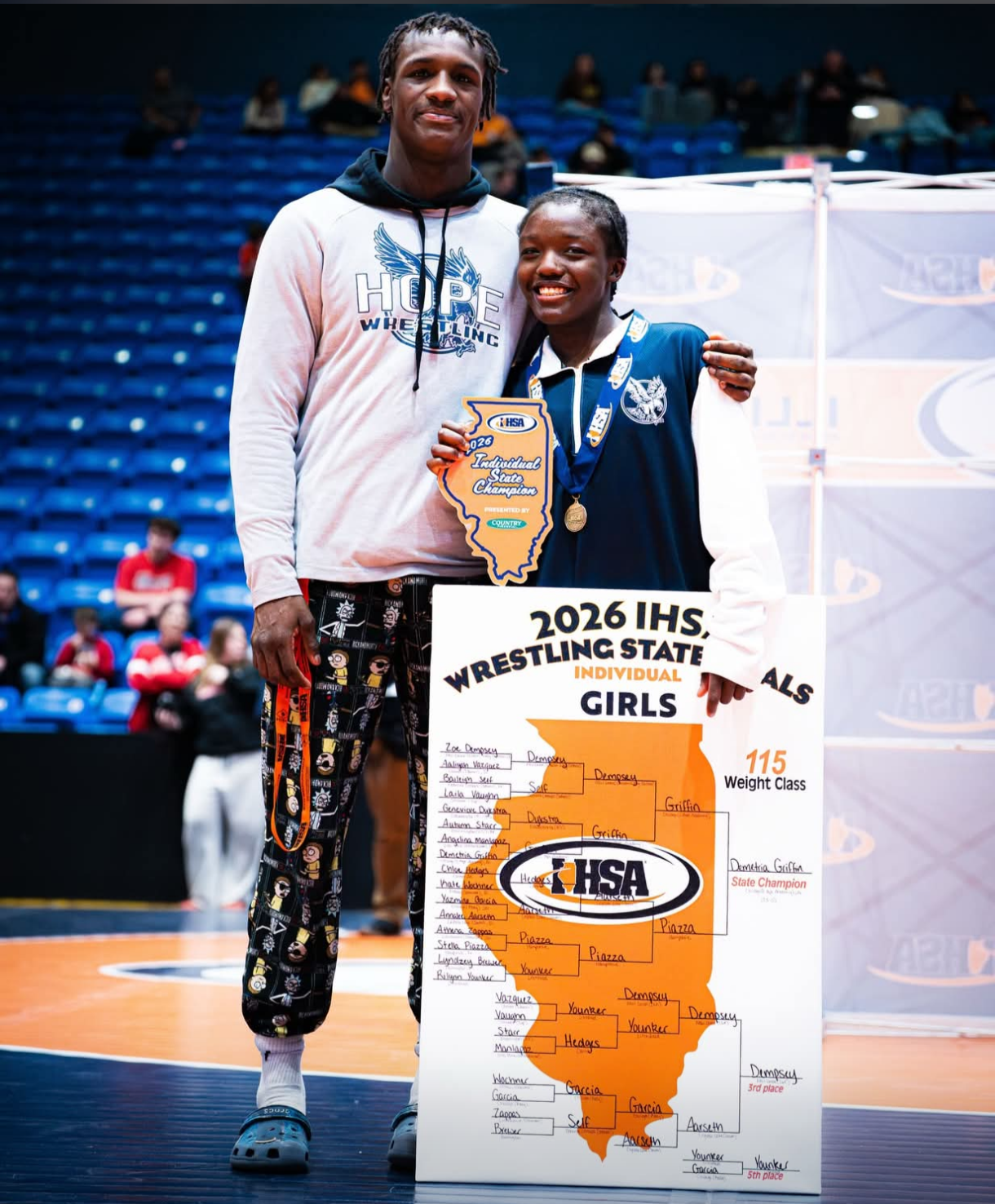
Chicago’s girls were making history at home, too. The chapter reported 17 qualifiers and nine All-State wrestlers at the 2026 IHSA championships. Demetria “DJ” Griffin finished an undefeated freshman season with a state title, becoming, according to BTSC, the first girl from the organization and the city of Chicago to win an IHSA wrestling championship.
Behind that progress stands Barrientos, known to her athletes as Coach Sammie.
In a WIN Magazine profile, she explained what drew her to coaching: “I wanted to become the person I needed when I was in their shoes.”
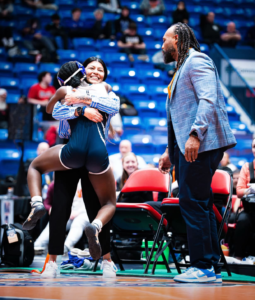
Coach Samantha “Sammie” Barrientos embraces Demetria Griffin after her state championship victory.
That commitment reaches beyond instruction. Chicago credits her with creating its Girls College Combine and Big Sister Practice, connecting athletes with college coaches and mentors. Its November 2025 account described a girls club serving more than 450 participants and credited her leadership with the girls’ national title. The Sport for Good Chicago Coalition, powered by Laureus USA, named her its 2025 Coach of the Year.
The recognition matters because it honors the whole job: helping a girl become a better wrestler while taking her future seriously.
In Michigan, another coach and another family carried that work from a state championship to the world stage.
Stephen Manuel, part of the Beat the Streets Detroit coaching community and founder of the Michigan Wrestling Academy, led Romeo High School to its first MHSAA girls team championship in 2026. The Bulldogs scored 80 points to Oxford’s 78.5, winning through accumulated individual tournament results. His daughters, Belicia and Kaili, delivered bonus-point victories in consecutive championship matches that helped secure the title.
The National Wrestling Coaches Association named Manuel Michigan’s 2026 USMC “Battles Won” Girls State Head Coach of the Year.
Belicia finished her senior high school season 50–0. She won the 155-pound final with a pin in 1:03, earning her second state championship. Kaili finished her junior season 48–1, winning at 170 pounds for her third consecutive state title.
Their summer extended the story. At Fargo, Belicia finished second at 145 pounds for her first Fargo All-American honor. Kaili won the Junior Girls 170-pound championship, adding to her 16U titles from 2024 and 2025 for a third career Fargo gold.
Then, on July 30 in Baku, Azerbaijan, Kaili became a U17 world champion. She defeated Ukraine’s Solomiia Petriv 8–1 in the 73-kilogram final.
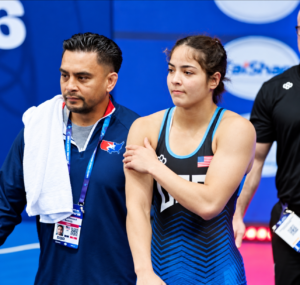
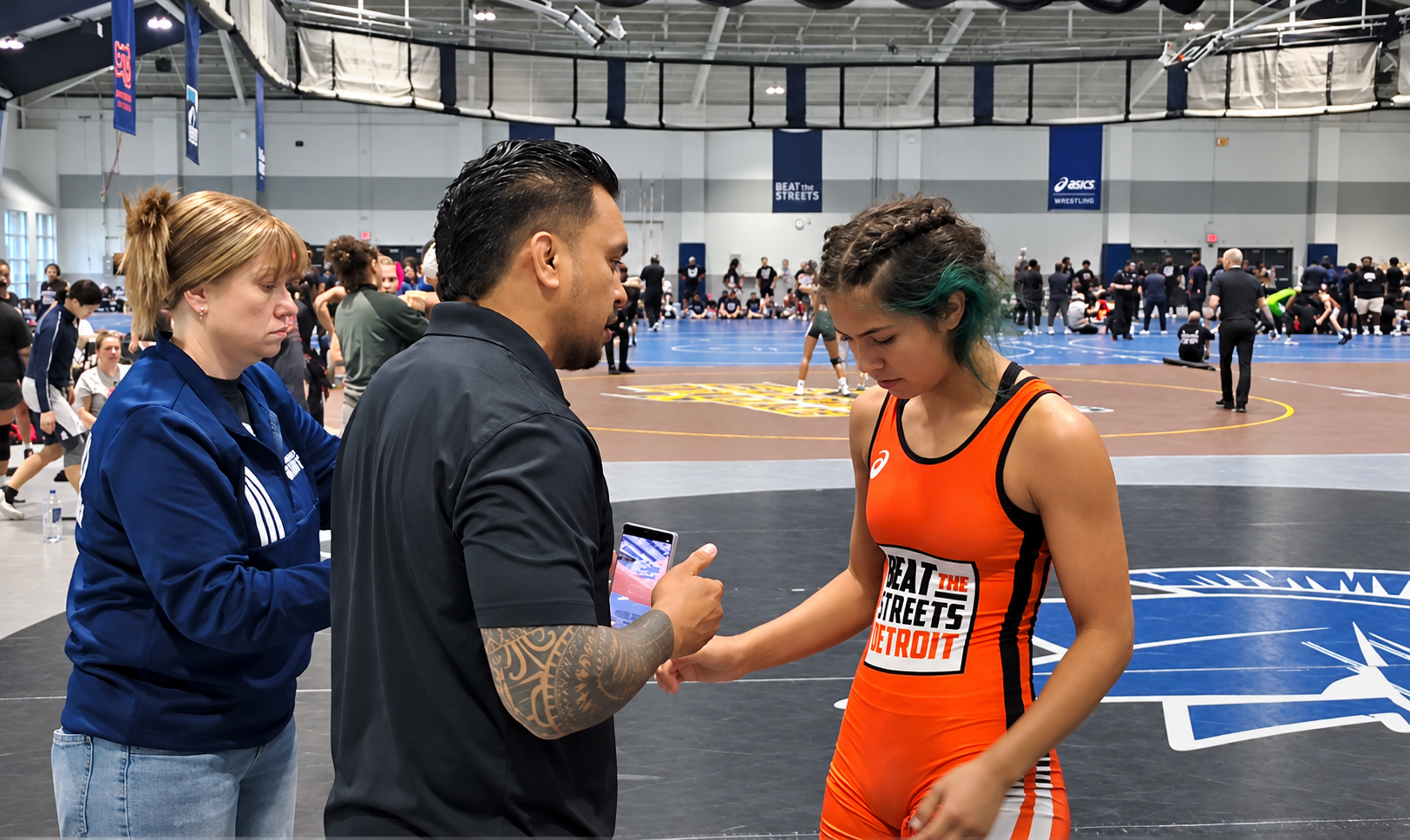
Coach Steve Manuel walks behind his daughter, Kaili Manuel, before her world championship final, where she went on to win gold.
A local wrestling room had become part of a journey to the top of the world.
These achievements belong to the athletes who earned them, their families, and the many coaches and programs that helped them develop. For BTS, they demonstrate what opportunity can support: beginners finding confidence, girls becoming leaders, and exceptional athletes pursuing exceptional goals.
In Detroit, wrestling opens the door to tutoring, equipment, mentoring and educational programming, with services available at no cost to families who cannot afford to pay. Beat the Streets Detroit directly supports 11 high schools, extending its reach through partnerships with Detroit Public Schools Community District, Champions Education Network, University of Detroit Jesuit High School & Academy, and Detroit Parks and Recreation. Chicago carries that mission forward on an even larger scale, pairing wrestling with tutoring and its Life Champions Academy to help young people succeed beyond the mat. Together, these chapters show the strength of the Beat the Streets model: consistent local support connected to a national network that creates opportunities no single neighborhood program could easily provide alone.
There is something extraordinary in that combination: a community close enough to know a young person, and a network broad enough to help them see farther.
Call it a miracle organization and look closely at how the miracle happens. You will find coaches, families, volunteers, and donors doing the work again tomorrow.
You will find a girl asking for a team at her school.
And someone saying yes.
Have a question, feedback, have a wrestling story worth telling or want to support BTS? Contact J.R. Casarez at jrusso@btsdetroit.org.