
Part One — The Surge: The Growth Wrestling Was Waiting For
Girls did not simply find a place in wrestling. They became the strongest source of new participation in the sport.
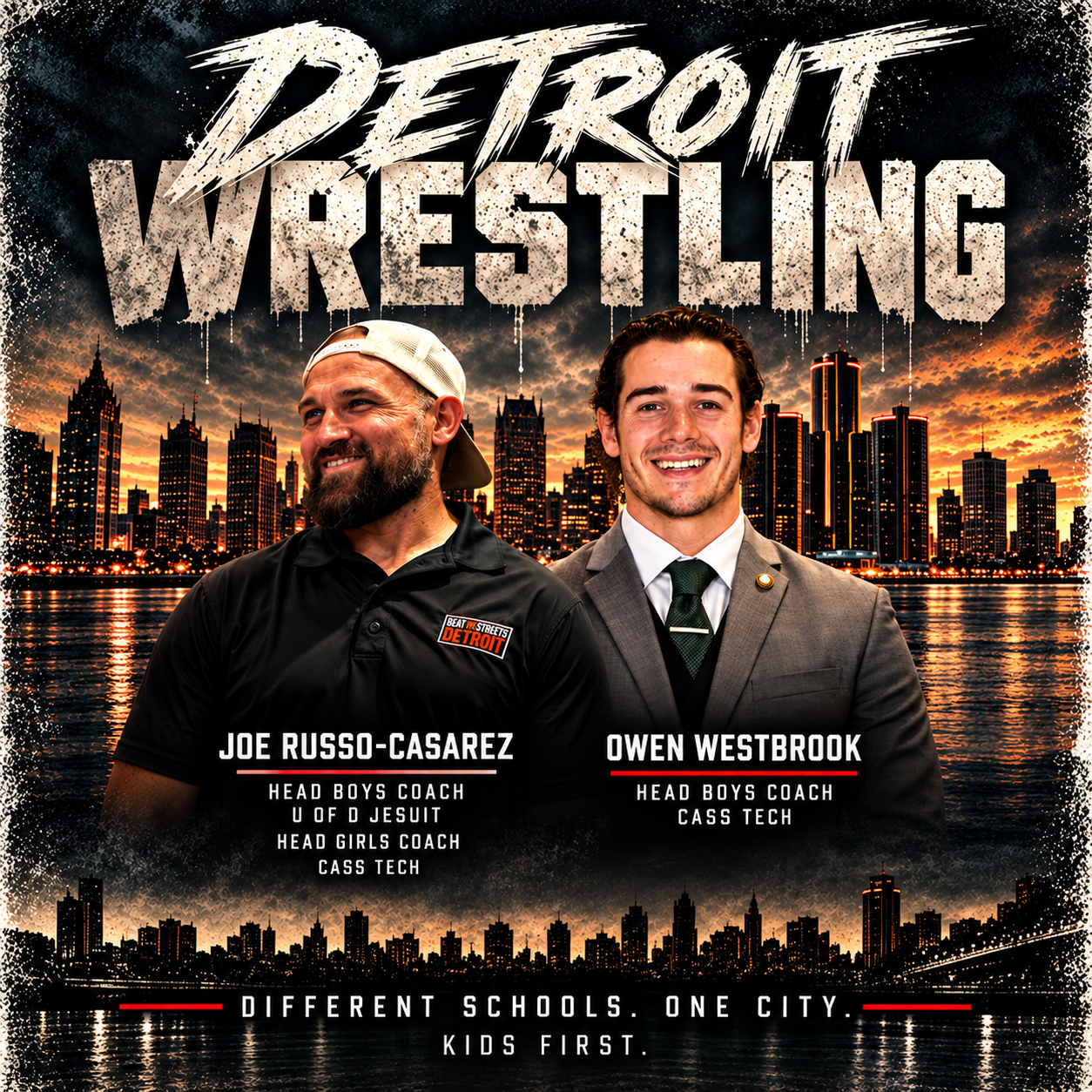
By J.R. Casarez
DETROIT, MI — Girls are saving wrestling.
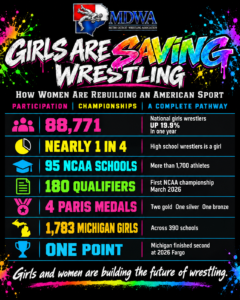
It is a bold statement, but the national numbers make it increasingly difficult to argue with. High school wrestling reached a record 384,030 participants in 2025–26. Girls wrestling grew 19.9 percent to 88,771 athletes across 8,853 programs. Boys participation declined 1.7 percent to 295,259.
Girls accounted for all of the sport’s net growth, and then some.
Nearly one out of every four high school wrestlers is now a girl. Only four seasons earlier, in 2021–22, 31,654 girls participated nationally. That number has nearly tripled. The number of schools reporting girls programs rose from 4,802 to 8,853, and 40 state associations now conduct girls state championships.
This is more than the emergence of a successful new division. It is a renewal of the entire wrestling ecosystem.
Wrestling has spent decades fighting for survival, defending roster numbers, convincing athletic departments of its value and watching college programs disappear. In 2013, the sport was even recommended for removal from the Olympic program.
Most in the wrestling world can remember buying a “Save Olympic Wrestling” shirt at their local youth and high school tournaments. At the time, people throughout the wrestling community were asking how the world’s oldest sport could be fighting to keep its place on the world’s largest athletic stage.
Girls wrestling has not solved every challenge facing the sport, but it has given wrestling something it desperately needed: a new growth engine.
For years, we worried about shrinking rosters, disappearing college teams and whether the next generation would choose wrestling over better-funded alternatives. Girls have changed the direction of that conversation. They are filling wrestling rooms, strengthening sanctioning arguments, creating coaching positions and bringing thousands of new families into the sport.
A girl who joins wrestling rarely arrives alone. Parents become volunteers. Brothers and sisters enter youth clubs. Schools purchase equipment. Communities host tournaments. New fans learn the scoring. Alumni who once drifted away return to coach.
Growth in one division creates activity throughout the entire system.
I have watched this transformation happen in real time.
In Detroit, girls who once would have been isolated inside the few boys programs are now walking into rooms where they expect teammates, qualified coaches and legitimate competitive opportunities. They are no longer entering the sport simply hoping to be accepted. They are entering with the expectation that they belong.
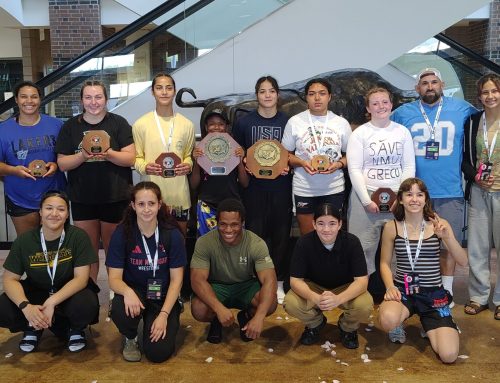
Cass Tech fielded the first all-girls dual team in Detroit history. That was not a ceremonial milestone or a photo opportunity. It changed who entered the room, how families viewed the program and what younger girls believed was possible.
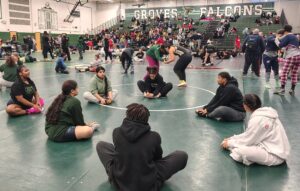
Once a girl sees an entire lineup of athletes who look like her, the question changes. It is no longer, “Can girls wrestle?” It becomes, “Where do I fit in the lineup?”
That shift matters.
Women are also reshaping what wrestling looks like. They have helped move the sport away from the old idea that toughness must look or sound only one way. The women’s side has produced its own technical styles, rivalries, leaders and traditions while preserving wrestling’s essential demands: preparation, courage, discipline and accountability.
The language surrounding girls wrestling is changing too.
A decade ago, coverage often celebrated the novelty of a girl competing. Today, the conversation is about rankings, recruiting, roster depth, team scores and national titles. That is progress. Serious athletes want to be recognized not merely for entering the arena, but for what they accomplish inside it.
The sport’s structure is beginning to catch up. Separate state championships have made girls visible as a competitive division. Complete girls teams are becoming a realistic expectation. Dual meets give developing athletes a role even when they are not individual title contenders, and they reward schools that recruit, retain and coach a full lineup.
That team element matters because sustainable sports are built on belonging.
An individual tournament can crown a champion. A dual season can create a culture. It gives athletes shared stakes, gives schools rivalries to promote and gives communities a reason to gather on a weeknight.
National growth is now pressing wrestling toward its next set of questions.
Will every girl have access to a qualified coach and consistent practice partners? Will rural and urban programs receive the same opportunities for travel and offseason development? Will schools build complete teams or remain satisfied with a few exceptional individuals? Will girls receive equal promotion, prime competition times and the resources required to remain in the sport?
Those are not objections to growth. They are the responsibilities created by success.
The days of asking whether girls wrestling will survive are ending. The challenge now is building an infrastructure worthy of the athletes who have arrived.
The wrestling community cannot celebrate participation records while continuing to offer girls partial programs. A state championship is not enough if athletes spend the rest of the season without teammates, qualified coaching or meaningful dual competition.
Schools must stop treating girls wrestling as an addition to the boys program and begin building it as a complete sport.
That means dedicated administrators, coaches, budgets, competition schedules, travel opportunities and equal promotion. It means developing full teams rather than relying on one or two exceptional athletes to represent an entire school. It means investing in dual competition instead of limiting girls to individual tournaments.
It must also begin earlier.
Youth organizations cannot wait until girls enter high school to begin recruiting them. Girls need opportunities to see the sport, try it and find community before they reach ninth grade. High school programs will struggle to build complete lineups if the youth pipeline remains inconsistent.
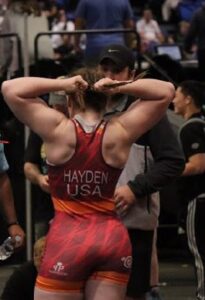
The college level must prepare for what is coming too. Tens of thousands of girls are entering wrestling, improving in deeper rooms and graduating with the expectation that they will have opportunities to continue. College programs must expand fast enough to receive them.
If we build participation without creating a strong next level, we will eventually create a bottleneck instead of a pathway.
Michigan offers a useful preview of what is possible. The state counted a record 1,783 high school girls in 2025–26, an increase of 18.5 percent in one year and more than double its participation from 2022–23.
Michigan paired that growth with national results: a 2025 Junior Women’s National Duals championship and a second-place finish at the 2026 Fargo Junior freestyle tournament, finishing only one point behind Pennsylvania.
That success did not happen because a handful of exceptional athletes appeared at the same time. It grew from expanding opportunities, stronger clubs, committed coaches and increasingly competitive rooms.
Michigan’s national results show what becomes possible when participation and development grow together.
More girls create deeper rooms. Deeper rooms create better competition. Better competition creates champions, college recruits, coaches and role models who bring the next generation through the door.
That cycle is the real promise of this movement.
Girls are not saving wrestling because the boys side no longer matters. They are saving it by widening the base beneath the entire sport. They are bringing new energy into wrestling rooms, new families into the stands and new reasons for schools and colleges to invest.
They have given wrestling something every tradition needs if it intends to last: new people who love it enough to make it their own.
The future did not arrive by asking permission. It put on wrestling shoes and stepped onto the mat.

Have a question, feedback, have a wrestling story worth telling or want to support BTS? Contact J.R. Casarez at jrusso@btsdetroit.org.